
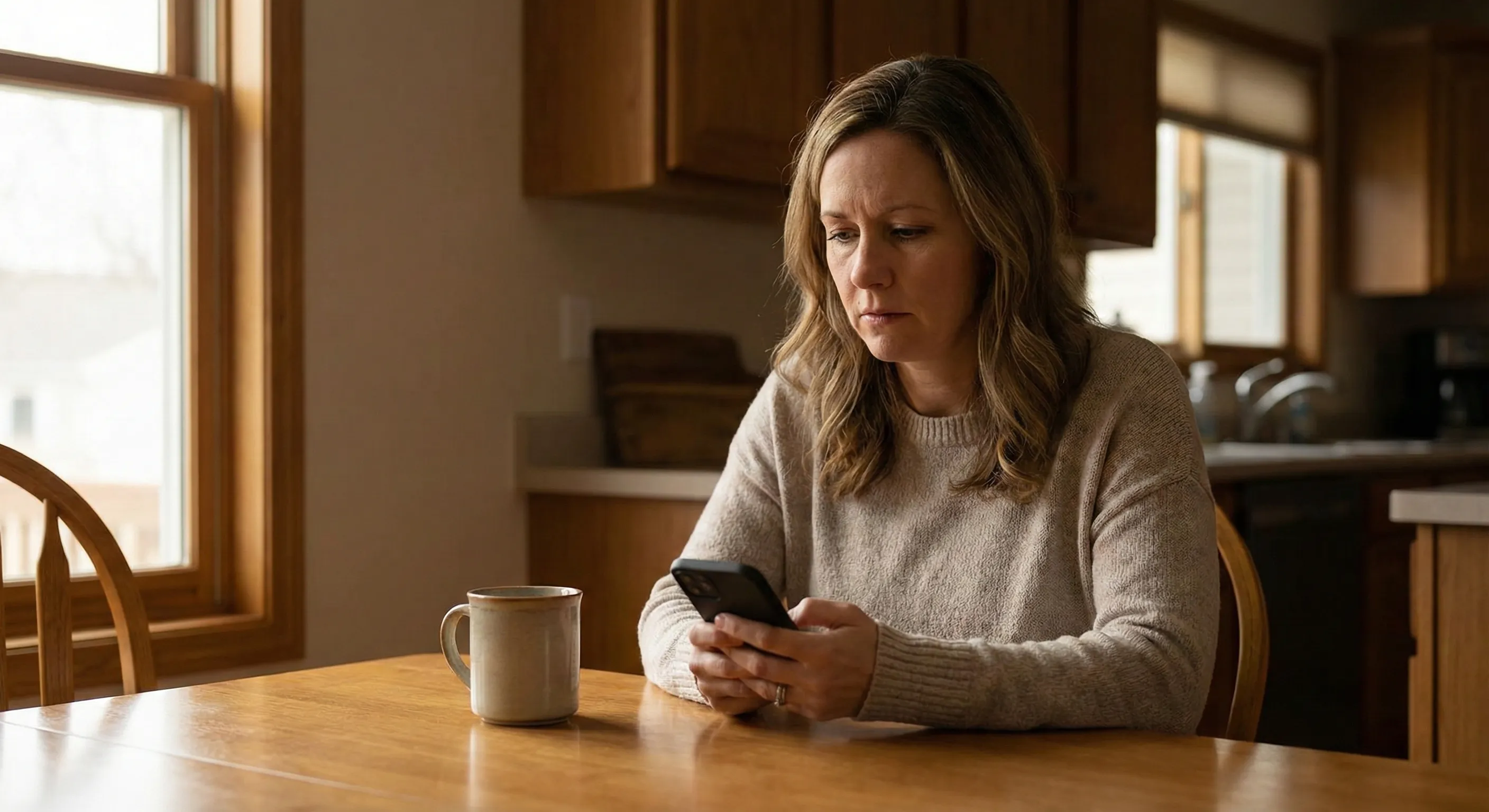
Is Mom okay?

You ask because you care. And because sometimes the answer isn't what she tells you.

Mom sounds fine on the phone. But you know something feels different.

Maybe she's mentioned being tired more than usual. Or you noticed the fridge was emptier than expected during your last visit. Small things — things she dismisses — that leave you wondering what else you're not seeing.

The hardest part isn't the worry. It's not knowing.

What Families Worry About

💊

Medication complexity

Missed doses, double doses, or confusion after a prescription change. Hard to catch from a distance.

🥗

Nutrition and hydration

Skipped meals, low fluid intake, unintended weight changes. The slow slide that rarely gets mentioned.

🏠

Subtle functional decline

Housekeeping slipping, laundry piling up, less movement around the house than before.

💭

Social isolation

Less contact with friends, skipped activities, changes in mood and motivation that creep in quietly.

What Can Happen When No One's Watching

Problems don't always announce themselves. Often, the real issue is gradual drift that becomes a crisis only when it's too late for the easy solutions:

  • Gradual health decline — weight loss, weakness, or dehydration that wasn't caught early
  • Preventable medication issues — timing mix-ups or drug interactions that could've been avoided
  • Increased fall risk — from reduced mobility, poor nutrition, or medication side effects
  • Family stress and burnout — the exhaustion of constant worry and endless check-in calls

Most of these aren't medical emergencies — until they are. The difference is often just awareness.

The Pattern Families Recognize

"She'd say everything was fine. But when I visited, I could tell she hadn't been cooking. There were expired groceries and she'd lost weight. She didn't want to worry me."

Moms often protect their children — even adult children — from worry. She doesn't mention the dizziness, the confusion, the difficulty with stairs. She handles it, or she minimizes it.

The result: you only find out something's wrong when it becomes impossible to hide.

What Helps

1

See the real picture

A home safety review looks at daily life — medication setup, mobility, nutrition patterns, and fall risks — not just medical charts.

2

Reduce everyday risks

Simple home modifications make the house safer for the routines she already has — bathroom safety, better lighting, easier access.

3

Stay quietly aware

Activity monitoring shows patterns — not every movement — so you know when something changes without constant calling.

This Isn't About Taking Over

Mom wants to manage her own life. That's reasonable. And you can support that while still having visibility into what's actually happening.

StillWell Health gives you awareness without intrusion. She keeps her independence and privacy. You stop guessing.

It's not about control. It's about care.

Why noticing small changes matters

📉

Changes in routine often happen before visible problems

🚶

Reduced movement can increase fall risk

🛏️

Bathroom and sleep changes are early warning signs

👁️

Passive awareness helps families respond sooner, not later

We Serve Families Near You

StillWell Health supports families in the St. Louis Metro East region with home monitoring and safety solutions.

Research shows most at-home falls aren't caused by sudden medical events—they're driven by environmental factors that can be identified and addressed.

In situations like this, the most effective first step is a professional home safety review—before small risks turn into bigger decisions.

Let's talk about Mom.

Tell us what you're noticing. We'll help you figure out what to watch for and whether we can help.