
Resource Guide

Medicaid and Medicare: Home Safety Modifications in Illinois

Understanding how Medicaid and Medicare can help pay for grab bars, ramps, and other home safety upgrades โ€” so your loved one can stay safe and independent at home.

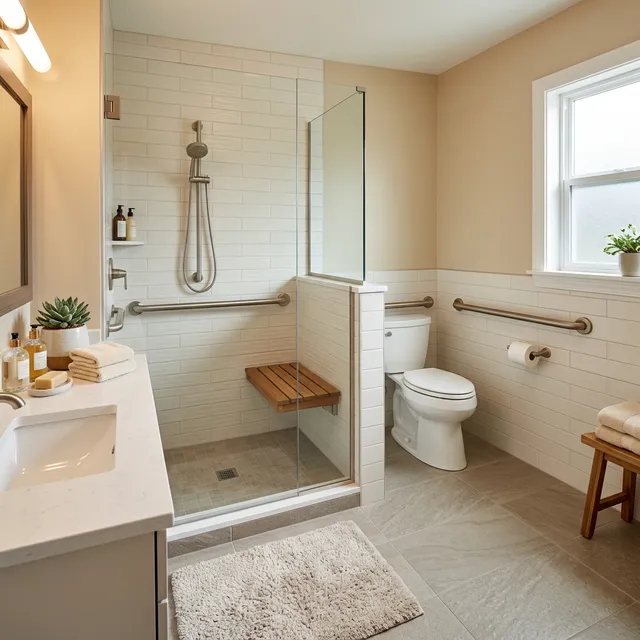
A senior-accessible bathroom with professionally installed grab bars, walk-in shower with bench, and non-slip flooring

Medicare vs. Medicaid: What's the Difference?

Both programs serve different roles when it comes to home safety โ€” and understanding the distinction saves families time, money, and frustration.

๐Ÿฅ Medicare

Federal insurance for age 65+

  • Covers durable medical equipment (walkers, hospital beds)
  • Does not typically cover home modifications
  • Some Medicare Advantage plans may offer partial coverage
  • Focus is on medical treatment, not home environment

๐Ÿ  Medicaid

State/federal program based on income

  • Covers home modifications through HCBS waiver programs
  • Grab bars, ramps, walk-in tubs, stairlifts, and more
  • Eligibility based on income, assets, and medical necessity
  • Goal: keep people safely at home, avoid institutional care

Bottom line: If you're looking for help paying for home safety modifications in Illinois, Medicaid waiver programs are your best path โ€” not Medicare.

Home Safety Modifications You May Be Eligible For

Illinois Medicaid covers practical modifications that enhance safety and independence. Each must be documented as medically necessary.

๐Ÿšฟ

Grab Bars

In bathrooms near toilet, tub, and shower areas

โ™ฟ

Wheelchair Ramps

For safe entry and exit from the home

๐Ÿ›

Walk-In Tubs & Showers

Accessible bathing with low or no threshold

๐Ÿ”ฆ

Improved Lighting

Better visibility in hallways, stairs, and living areas

๐Ÿชœ

Stairlifts

Motorized chairs for navigating stairs safely

๐Ÿšช

Wider Doorways

Accommodating wheelchairs and mobility aids

๐Ÿฆถ

Non-Slip Flooring

Reducing fall risk on bathroom and kitchen floors

๐Ÿ“ฑ

PERS Devices

Personal emergency response systems for peace of mind

Navigating the Application Process in Illinois

The process involves coordination between your healthcare provider, state agencies, and contractors. Here's the roadmap:

1

Consult Your Healthcare Provider

Get a medical evaluation documenting which modifications are needed and why. This is the foundation of your application.

2

Submit a Referral

Contact your local Center for Independent Living (CIL) or the Department of Rehabilitation Services (DRS) to begin the formal referral process.

3

Gather Documentation

Prepare medical records, physician's recommendation, proof of Illinois residency, and income/asset documentation for Medicaid eligibility.

4

Home Assessment

Work with an assessor to ensure proposed modifications meet building codes, ADA standards, and your specific functional needs.

5

Contractor Bids & Authorization

Obtain bids from qualified contractors (facilitated by CILs), receive authorization from the state agency, and complete the work.

6

Post-Work Verification

A final inspection confirms the modifications were completed correctly and meet the documented needs.

Key Eligibility & Documentation Requirements

๐Ÿ“‹ Medical Documentation

  • Medical records detailing your condition
  • Physician's written recommendation for specific modifications
  • Documentation linking condition to functional limitations

๐Ÿ“ Residency & Financial

  • Proof of Illinois residency
  • Income documentation for Medicaid eligibility
  • Asset documentation (bank statements, property)

๐Ÿ”ง Provider Requirements

  • Contractors must be properly licensed and insured
  • Registration with the relevant state agency
  • Work must meet building codes and accessibility standards

The Real Difference These Modifications Make

Home safety modifications aren't just about preventing accidents. They preserve independence, dignity, and quality of life โ€” while saving families thousands compared to institutional care.

๐Ÿ›ก๏ธ

Prevent Falls & Injuries

Grab bars, non-slip surfaces, and improved lighting address the environmental factors behind most senior falls.

๐Ÿก

Stay Home Longer

Targeted modifications delay or eliminate the need for assisted living โ€” saving $60Kโ€“$96K per year.

โค๏ธ

Preserve Dignity

Independent bathing, safe mobility, and accessible spaces maintain normalcy and self-respect.

Already thinking about next steps? A professional Home Safety Review identifies the specific modifications your loved one's home needs โ€” and helps prioritize what matters most.

Understanding Coverage Limitations

Medicare Limitations

Standard Medicare (Parts A & B) does not cover home modifications. Some Medicare Advantage (Part C) plans may include supplemental benefits for home safety upgrades, but coverage varies significantly by plan and region. Always verify with your specific plan.

Medicaid's HCBS Approach

Medicaid views home modifications as part of long-term care under Home and Community-Based Services (HCBS) waivers. This approach prioritizes keeping individuals at home โ€” often resulting in significant cost savings compared to institutional care while improving quality of life.

๐Ÿ’ก Tip: Even if you don't qualify for Medicaid, private-pay home modifications are a fraction of the cost of assisted living. A $500 grab bar installation versus $7,000/month facility care is a clear value comparison. Learn more about our transparent pricing.

Frequently Asked Questions

Does Medicare pay for home safety modifications?

Generally, no. Medicare focuses on durable medical equipment (DME) like walkers and hospital beds. It does not typically cover structural home modifications like grab bars or ramps. However, some Medicare Advantage plans may offer limited coverage for home safety upgrades โ€” check with your specific plan.

Does Illinois Medicaid cover home modifications?

Yes. Illinois Medicaid covers home modifications through Home and Community-Based Services (HCBS) waiver programs. These waivers fund adaptations like grab bars, wheelchair ramps, and bathroom accessibility improvements for eligible individuals. Eligibility is based on income, assets, and documented medical necessity.

What home modifications does Medicaid cover in Illinois?

Covered modifications typically include grab bars, wheelchair ramps, non-slip flooring, walk-in tubs or shower conversions, stairlifts, improved lighting, and wider doorways. Each modification must be documented as medically necessary by a healthcare provider.

How do I apply for Medicaid-covered home modifications in Illinois?

Start by consulting your healthcare provider to document the medical need. Then submit a referral through your local Center for Independent Living (CIL) or the Department of Rehabilitation Services (DRS). You'll need medical records, a physician's recommendation, proof of Illinois residency, and income/asset documentation.

What is the Illinois Home Services Program?

The Home Services Program (HSP) is administered by the Illinois Department of Human Services. It helps individuals with disabilities remain in their homes by funding personal assistants, home modifications, and assistive technology. Eligibility is based on functional need and financial criteria.

Colton Henderson, Founder of StillWell Health

About the Author

Colton Henderson, MSN, RN

Colton Henderson is the founder of StillWell Health, a nurse by trade with experience in emergency care, healthcare SaaS, and aging-in-place solutions. He helps families across Greater St. Louis and Southern Illinois keep seniors safe at home.

Not sure where to start?

A StillWell Home Safety Review identifies the specific modifications your loved one needs โ€” and provides a prioritized plan with cost guidance. Whether you're exploring Medicaid options or paying privately, we help you understand what matters most.

Call Us Book a Safety Review