Free Guide

The 'I'm Fine' Trap: How to Start the Home Safety Conversation

When your aging parent insists everything is okay — but you see potential safety hazards — here's how to bridge the gap with empathy and practical steps.

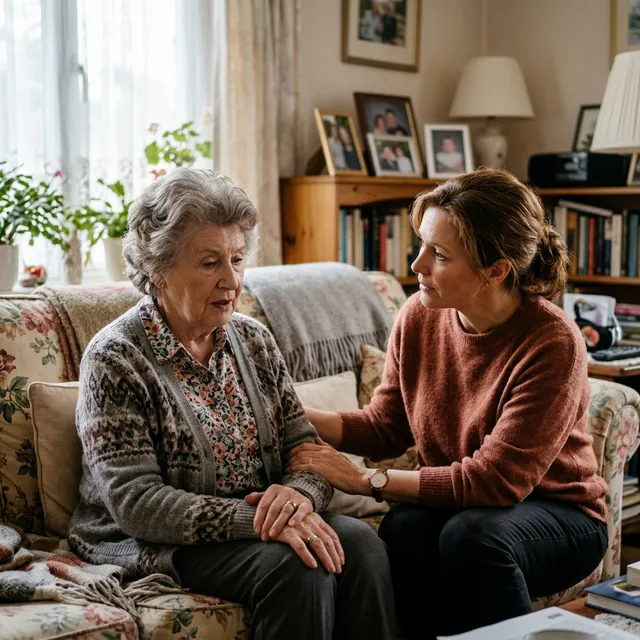
An adult daughter sitting with her elderly mother on a couch, having a gentle and caring conversation about home safety

It's challenging when your aging parent insists, "I'm fine," while you see potential safety hazards in their home. As adult children, we work to respect our parents' independence while ensuring their safety. But how do we find this delicate balance?

Let's explore the 'I'm Fine' mindset and practical ways to start this crucial conversation.

Understanding the 'I'm Fine' Mindset

For many older adults, staying independent is a deeply rooted desire. Safety awareness gaps among family caregivers often complicate this issue, as highlighted in a study published by the NIH. Caregivers of seniors, especially those with dementia, often lack the knowledge to identify safety problems. One caregiver admitted, "I didn't know anything about home care safety."

83%

of seniors feel safer in their current homes than elsewhere

55%

of falls among older adults occur at home

10%

of U.S. homes have necessary accessibility features

Independence is a core value for most seniors, with the vast majority feeling safer in their current homes than elsewhere. However, this preference can clash with accepting necessary safety modifications. Supervision challenges also arise when family caregivers, juggling multiple roles, cannot provide continuous oversight, leading to preventable accidents.

Cultural attitudes play a role, as some caregivers believe that restricting activities — rather than enhancing the home environment — is the right approach. Yet, fall statistics highlight the urgency, with over half of falls occurring at home. Moreover, fire risk increases with age, with careless smoking being a leading cause of fire deaths among seniors. Despite these risks, only 10% of U.S. homes have the necessary accessibility features for aging residents, indicating a significant gap in home safety.

Starting the Conversation: Tips and Techniques

Opening a dialogue about home safety doesn't need to feel like an interrogation. Research emphasizes open communication as a foundation for positive outcomes. Framing safety concerns as a collaborative assessment rather than an inspection can reduce defensiveness.

✅ Try This

"Let's ensure your home stays as comfortable as possible."

❌ Avoid This

Pinpointing problems or making it feel like an inspection of their abilities.

Focus on specific observations rather than general concerns. For example, mention incidents like, "I noticed you had difficulty with the bathroom step." Encouraging a two-way conversation allows seniors to voice their safety concerns, including hazards they've noticed but perhaps dismissed.

The timing and setting of these discussions are also crucial. Calm, non-confrontational environments work best. When family caregivers first educate themselves about home safety, they can present solutions as collaborative problem-solving, which reduces resistance.

Assessing Home Safety Together

The home should be a place of comfort, not a source of worry. Falls are the dominant indoor safety hazard, often due to slippery floors, inadequate lighting, and clutter. The bathroom is particularly risky without grab bars and non-slip mats.

🚿

Bathroom Hazards

Slippery surfaces, lack of grab bars and non-slip mats make the bathroom one of the most dangerous rooms.

🪜

Stair Hazards

Missing handrails, poor lighting, and worn treads require immediate attention.

💡

Lighting Deficiencies

Inadequate lighting in hallways, stairwells, and entryways increases both fall and fire risk.

🔥

Fire Safety

Non-functional smoke detectors and missing fire extinguishers are often overlooked. Test detectors monthly.

💊

Medication Management

Disorganized medications and missed doses are a common yet vital safety concern for aging adults.

🆘

Emergency Preparedness

Many caregivers fail to set up emergency plans, leaving dangerous gaps during critical moments.

Access to comprehensive checklists from organizations like the CDC can help families conduct thorough safety assessments. Environmental modifications, such as grab bars and anti-slip mats, effectively reduce injury risk, though they're underutilized due to knowledge gaps.

Tip: Use our Home Safety Checklist to walk through your parent's home together — it turns a difficult conversation into a structured activity.

Resources and Support for Families

You're not alone in this journey. Local aging and disability resource centers offer professional in-home safety assessments and can connect families with modification services. Healthcare professionals like primary care physicians and occupational therapists can evaluate functional limitations and recommend modifications, adding credibility to safety concerns.

📋

Comprehensive Checklists

Reduce overwhelm with structured, room-by-room assessments that guide the conversation.

📱

Technology Solutions

Medical alert systems and non-intrusive monitoring support independence while preserving privacy.

🤝

Community Networks

Shared experiences and guidance from support groups relieve family stress.

🏥

Professional Care

Flexible home care services bridge gaps when family members can't be present.

Financial constraints can be real challenges, pointing to a need for creative solutions like community funding programs. Seasonal safety adjustments, such as preparing for winter hazards, are also essential considerations that families should revisit throughout the year.

Finding the Balance

Navigating the 'I'm Fine' trap requires empathy, patience, and a collaborative approach. By understanding your parent's mindset and using available resources, meaningful conversations can preserve their independence while enhancing safety.

At StillWell Health, we believe in supporting aging in place with dignity, helping families find reassurance without sacrificing autonomy. Explore our resources to start the conversation with your loved ones today.

Frequently Asked Questions

How do I talk to my aging parent about home safety when they say they're fine?

Start by framing the conversation as a collaborative effort rather than an inspection. Use specific observations like 'I noticed the bathroom step has been tricky' instead of general concerns. Choose a calm, relaxed setting and focus on preserving their independence while making small improvements.

Why do seniors resist help with home safety?

Independence is a core value for most seniors, with 83% feeling safer in their current homes than elsewhere. Accepting safety modifications can feel like admitting decline. Cultural attitudes and a desire to maintain control over their environment also contribute to resistance.

What are the biggest home safety risks for aging parents?

Falls are the dominant indoor hazard, with 55% of falls among older adults occurring at home. Key risk areas include slippery floors, inadequate lighting, clutter, bathrooms without grab bars, stairs without handrails, and outdated fire safety equipment. Only 10% of U.S. homes have necessary accessibility features.

Colton Henderson, Founder of StillWell Health

About the Author

Colton Henderson, MSN, RN

Colton Henderson is the founder of StillWell Health, a nurse by trade with experience in emergency care, healthcare SaaS, and aging-in-place solutions. He helps families across Greater St. Louis and Southern Illinois keep seniors safe at home.

Ready to start the conversation?

A Home Safety Review gives your family a neutral starting point — real observations, practical suggestions, and a plan you can work through together.

Call Us Book a Safety Review