
Free Guide

Elderly Monitoring Systems: What Families Need to Know

Choosing a monitoring system for an aging parent is overwhelming. This guide breaks down the options, costs, and trade-offs so you can make an informed decision.

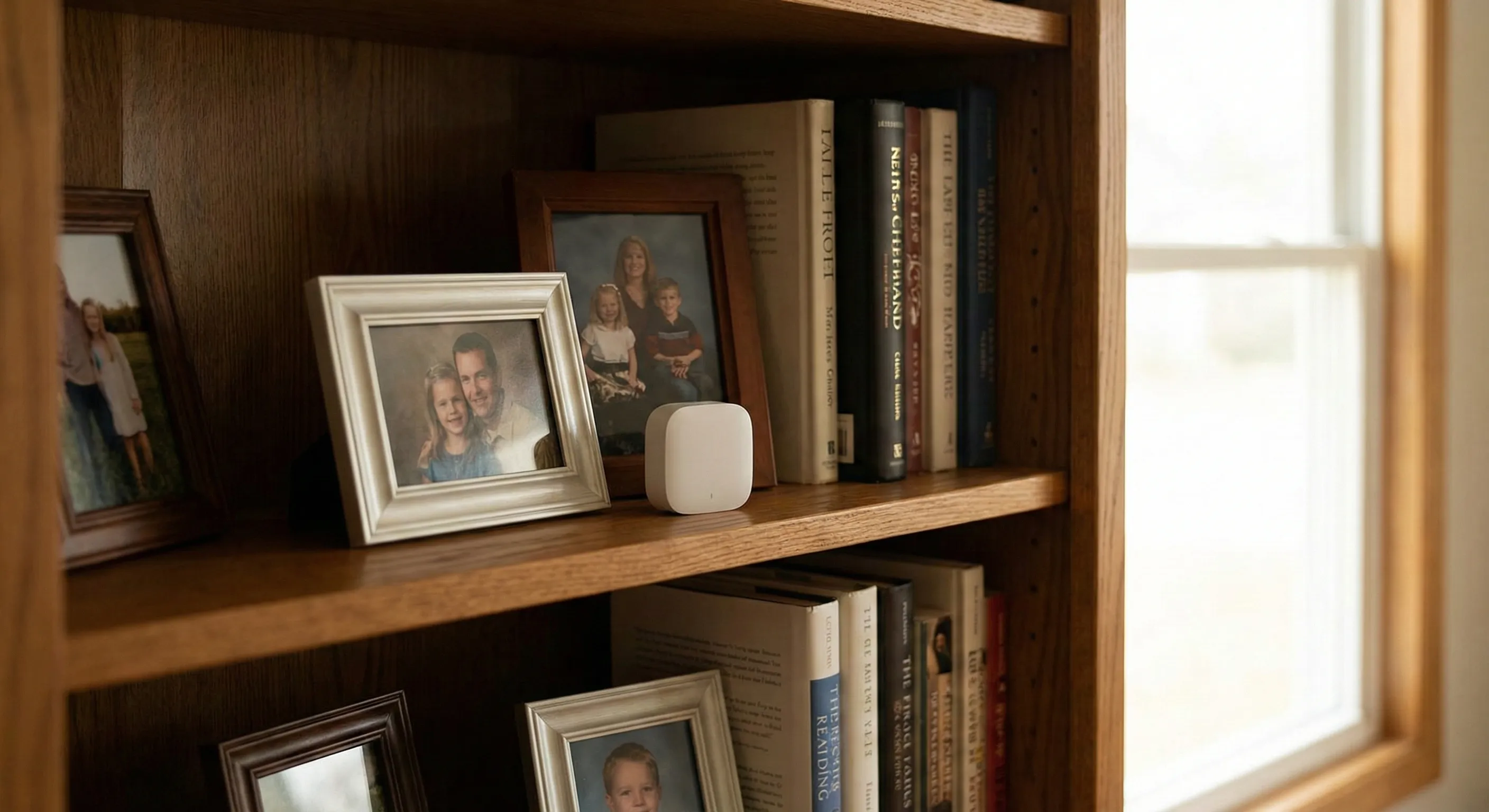
A small, discreet monitoring sensor sitting unobtrusively on a living room bookshelf among family photos and decorations

Why Families Consider Monitoring

Most families start thinking about monitoring after a specific event — a fall, a missed medication, a neighbor mentioning something concerning. The goal isn't surveillance. It's quiet awareness that reduces worry and catches problems early.

📞

Calling multiple times a day "just to check in"

😰

Worrying every time they don't answer the phone

🔄

Noticing subtle changes but not knowing what to do

🏥

Recovering from a fall or hospitalization

If any of these sound familiar, monitoring may be worth exploring.

Types of Elderly Monitoring Systems

Medical Alert Pendants

Wearable devices (pendant, bracelet, or watch) with an emergency button that connects to a 24/7 monitoring center.

Strengths

  • Immediate emergency response
  • Well-established technology
  • Some include fall detection

Limitations

  • Must be worn to work
  • Button must be pressed (in a crisis, often isn't)
  • Doesn't detect gradual changes
  • High abandonment rate
$25–$50/mo

Camera Systems

Video cameras placed in the home that allow family members to check in visually, with some offering motion detection and alerts.

Strengths

  • Visual confirmation of safety
  • Can review footage after events
  • Motion-activated alerts

Limitations

  • Significant privacy concerns
  • High resistance from seniors
  • Doesn't learn patterns
  • Can feel like surveillance
$100–$400 + cloud fees

How to Choose the Right System

The right monitoring system depends on your family's specific situation. Here are the key factors to consider:

Will They Use It?

The best technology is useless if your parent won't wear it or turns it off. Non-wearable systems have the highest acceptance because there's nothing to remember or interact with.

What Are You Monitoring For?

Emergency-only (falls, medical events) → medical alert. Gradual decline and routine changes → sensor-based monitoring. Visual check-ins → cameras.

Privacy & Dignity

How does your parent feel about being monitored? Camera resistance is common and valid. Sensor-based systems are invisible in daily life.

Your Budget

Consider total cost: equipment, installation, and monthly fees. Medical alerts are cheapest monthly. Cameras have low ongoing costs but limited insight. Sensor systems fall in the middle.

StillWell's Approach to Senior Monitoring

StillWell Health takes a different approach from traditional elderly monitoring devices. Everything starts with a professional home safety assessment — not a product purchase.

1

Home Safety Review

A nurse-led assessment identifies actual risks and determines whether monitoring is even appropriate for your situation.

2

Home Modifications First

We fix environmental risks before adding technology. Monitoring works better when the home is already safer.

3

Right-Sized Monitoring

If monitoring makes sense, we configure it for your specific home and situation. No one-size-fits-all packages.

Many families complete the safety review and modifications without adding monitoring — and that's perfectly fine.

Frequently Asked Questions

What is the best elderly monitoring system?

The best system depends on your parent's needs. Medical alert pendants require active use (pressing a button). Camera systems provide visual monitoring but compromise privacy. Non-wearable sensor systems like StillWell detect routine changes passively — no buttons, no cameras, no wearables to forget. The best option is the one your parent will actually accept.

How does remote monitoring for elderly parents work?

Remote monitoring uses sensors placed throughout the home to track daily patterns — movement, sleep, bathroom visits, and activity levels. The system learns normal routines over time and alerts designated family members when meaningful changes occur, such as unusual inactivity or disrupted sleep patterns.

Do elderly monitoring systems require cameras?

No. Modern monitoring systems can use passive sensors (motion, temperature, door/window) to detect patterns without cameras. Camera-free monitoring preserves privacy and dignity while still providing meaningful awareness of daily routine changes.

How much do elderly monitoring systems cost?

Costs vary widely. Medical alert pendants typically run $25-50/month. Camera systems cost $100-400 for equipment plus optional cloud storage fees. Non-wearable sensor monitoring like StillWell offers two tiers: an Essential budget starter (~$150–$300 one-time, $0–$20/mo) and a Premium plan powered by EnvoyatHome ($399 one-time, $99/mo with behavioral analysis and cellular backup).

Will my parent accept being monitored?

Acceptance depends on the approach. Camera-based systems often face resistance due to privacy concerns. Wearable devices may be removed or forgotten. Non-wearable, sensor-based monitoring has higher acceptance rates because it's invisible in daily life — there's nothing to wear, charge, or remember.

Colton Henderson, Founder of StillWell Health

About the Author

Colton Henderson, MSN, RN

Colton Henderson is the founder of StillWell Health, a nurse by trade with experience in emergency care, healthcare SaaS, and aging-in-place solutions. He helps families across Greater St. Louis and Southern Illinois keep seniors safe at home.

Not sure which approach is right?

Start with a Home Safety Review. We'll help you understand your parent's actual risks and whether monitoring would add real value.

Call Us Book a Safety Review