
Guide

How to Help a Loved One Age in Place — Without Overcomplicating It

You don't need high-tech gadgets. A few thoughtful, low-tech changes can make their space safer, more comfortable, and easier to move through — without compromising their independence.

Older woman sitting comfortably in her sunlit living room with a cup of coffee, surrounded by a clean, well-organized, and safely modified home

Most older adults want to stay in their homes as they age. And most families want to make that possible. But once you start exploring options, the sea of smart devices, emergency alerts, and "aging tech" can get overwhelming.

Here's the reassuring part: you don't need high-tech gadgets to help someone stay at home. A few thoughtful, low-tech changes can make their space safer, more comfortable, and easier to move through — without compromising their independence.

Start with the Basics: What Really Needs to Change?

Before adding anything new, take a close look at the current home. What's working well? What's starting to cause strain?

Minimum Requirements for Aging in Place

For someone to age in place safely, the home needs to support three essentials:

  • Safe movement throughout the space (clear walkways, steady lighting)
  • Ease in daily routines (bathing, eating, getting dressed)
  • Reliable access to help when needed (from family, neighbors, or home care providers)

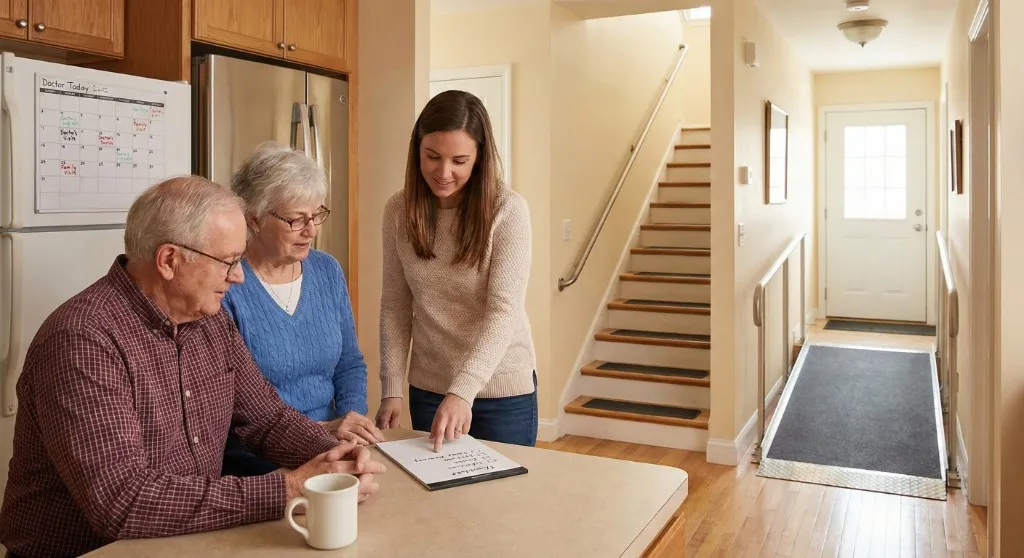
You don't have to tackle everything at once. Begin where issues are most likely — bathrooms, stairs, and entry points.

Simple Modifications That Make a Big Difference

Smart sensors and voice assistants aren't required. These low-tech updates are time-tested and effective:

🚿

Grab bars

In the bathroom, near the toilet and in the shower

🦶

Non-slip flooring

Or mats, especially on tiles and hardwood

💡

Improved lighting

In frequently used hallways and entryways

🏠

Ramps or threshold changes

Where steps pose a problem

🪜

Stairlifts

If mobility has decreased and key rooms are upstairs

These changes help reduce fall risk — one of the most common reasons older adults are hospitalized — and foster continued independence. Source

Independence vs. Safety: You Don't Have to Choose

Families often feel like they're walking a tightrope between "hovering too much" and "not doing enough." But safety and independence aren't competing priorities — they go hand in hand.

Support Autonomy with Structure

You can help your loved one keep control over their routines by:

  • Encouraging a self-directed daily schedule
  • Including them in decisions about home updates
  • Offering light, consistent help, not constant monitoring — like weekly groceries or an occasional medication reminder

This kind of support lowers stress, preserves dignity, and keeps the focus on life — not just care. Source

Comparing Approaches: High-Tech vs. Low-Tech Support

It's easy to assume "more tech" means "better care." But in many cases, basic changes do more — and feel more natural.

Feature High-Tech Option Low-Tech Alternative
Fall prevention Wearable alert or motion sensor Grab bars, non-slip flooring, brighter lighting
Medication management Smart pill dispenser Weekly pill organizer and check-ins
Safety monitoring 24/7 camera or app-based alerts Regular visits, phone calls, nearby support

Low-tech approaches often blend more easily into daily life — and still meet the same goals. What matters most is consistency and a fit that aligns with your loved one's lifestyle.

Tap Into Support — You Don't Have to Do It Alone

If you're unsure where to start or worried about cost, local programs and community networks can help.

Financial Assistance and Home Assessments

  • USDA Rural Development Housing Repair Loans and Grants can help fund changes like ramps and grab bars. Learn more
  • Home equity loans or reverse mortgages may offer funding options for larger updates
  • Many health providers or local agencies offer in-home safety assessments to guide next steps

Community Connections Matter

Aging in place isn't just about how the home functions — it's also about staying connected to community and routine.

  • Encourage engagement in local events, faith gatherings, or neighborhood strolls
  • Explore NORCs (Naturally Occurring Retirement Communities), where older adults offer informal support to one another in shared areas. Source
  • Talk with neighbors or friends nearby who can drop in occasionally — it doesn't have to be formal support, just familiar presence

Social ties are powerful. Staying connected often does more for well-being than any single piece of technology.

First Steps Checklist: Where to Begin

You don't need a renovation or subscription to start the process. This simple checklist can help guide your first decisions:

Walk through the home and note any spaces that feel unsafe or hard to use
Install grab bars and place non-slip mats in the bathroom
Improve lighting in dark hallways, stairwells, and entryways
Remove clutter and tripping hazards, like throw rugs
Ask your loved one which routines matter most — and support those first
Research local grants or home modification programs in your area
Create a regular check-in plan with family or nearby friends
Look into community groups or events they'd enjoy staying connected with

Keep It Simple, Keep It Personal

Nearly 90% of older adults say they want to stay in their own homes as they age. Source

That's not just about comfort — it's about familiarity, self-respect, and a sense of control.

You don't have to chase every new gadget or monitoring system. What matters most is building a daily environment that supports safety and ease — without disruption or overengineering.

Start with the basics. Listen to what your loved one values most. And remember: sometimes the strongest reassurance comes from days that feel completely normal and calmly uneventful.

Frequently Asked Questions

What does it mean to age in place?

Aging in place means living in your own home safely and independently as you grow older, rather than moving to a nursing facility or assisted living. With the right home modifications, community connections, and support systems, most older adults can continue living at home well into their later years.

What are the most important home modifications for aging in place?

The most impactful modifications are bathroom safety features (grab bars, non-slip mats), improved lighting in hallways and stairwells, removal of tripping hazards like throw rugs, and ramps or threshold adjustments at entry points. These low-cost changes address the most common causes of falls and injuries at home.

How much does it cost to modify a home for aging in place?

Basic safety modifications like grab bars, non-slip mats, and improved lighting can cost a few hundred dollars. Larger projects like stairlifts or bathroom remodels range from $2,000–$10,000+. Financial assistance is available through USDA Rural Development grants, home equity loans, and local community programs.

How do I know if my parent can safely live alone?

Evaluate three essentials: can they move safely through the home, manage daily routines (bathing, eating, dressing), and access help when needed? If any of these areas are struggling, a professional home safety assessment can identify specific risks and recommend practical solutions.

What is the difference between high-tech and low-tech aging in place solutions?

High-tech solutions include wearable alerts, smart pill dispensers, and camera-based monitoring systems. Low-tech alternatives include grab bars, pill organizers, regular check-in calls, and community support. Many families find that simple, low-tech changes are more natural, less intrusive, and equally effective for keeping loved ones safe.

Colton Henderson, Founder of StillWell Health

About the Author

Colton Henderson, MSN, RN

Colton Henderson is the founder of StillWell Health, a nurse by trade with experience in emergency care, healthcare SaaS, and aging-in-place solutions. He helps families across Greater St. Louis and Southern Illinois keep seniors safe at home.

Not sure where to start?

A Home Safety Review gives you a clear picture of what needs attention — and what's already working well. Our nurse founder personally walks through the home with your family.

Call Us Book a Safety Review